A free drinks promise. A cold day with fewer customers. A bonus due after a big win. Here is how businesses have used event contracts to help with costs they could face.
A real bar. A real reason to hedge.
Reported by Semafor ·
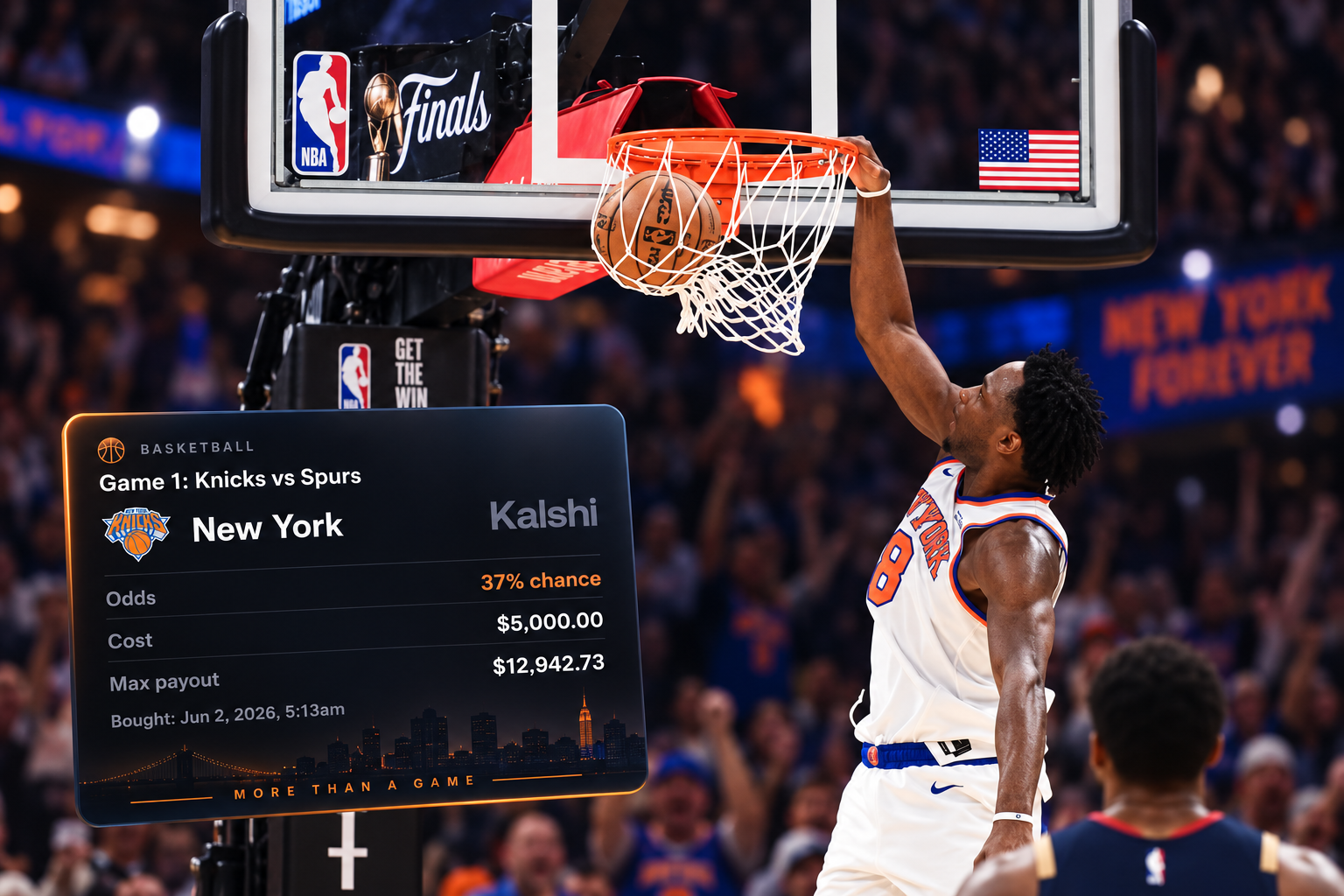
Knicks vs Spurs, NBA Finals Game 1. The image shows a $5,000 purchase and a $12,942.73 maximum payout.
Knicks win. Drinks are on the house.
For Game 1 of the NBA Finals, The Jeffrey in New York promised to cover up to $100 of food and drinks per customer if the Knicks won. Its owner used Kalshi to help pay for the offer.
Tab estimated before the game
$15,000
Spent on Kalshi contracts
$5,000
With a Knicks win
The bar covered the promised tabs. The winning contracts helped pay for them.
If the Knicks had lost
Customers would pay their tabs. The bar would lose the $5,000 spent on contracts.
The Block reported that Game Point Capital used Kalshi to hedge performance bonuses for two NBA teams, including payouts linked to reaching the playoffs.
The business cost at risk
A bonus becomes payable when a team reaches a milestone.
The possible offset
A contract tied to that milestone can offset some of the bonus expense.
The same principle works at different scales: match a future expense with a contract tied to the event that creates it.
Start with the cost you want to manage. Hedshi helps you compare a promotion or inventory plan with the cost of a relevant contract, its potential payout and what you would still pay in each outcome.
A hedge costs money. It can reduce a specific loss when the event and your costs line up. It does not guarantee extra customers, a profit or protection from every business risk.